What Does a Culture Consultant Actually Do?
The short answerA culture consultant helps an organization change how people actually work together. They diagnose the habits, norms, and structures behind recurring problems, then help leaders redesign the rituals, decision rights, and everyday behaviors that shape the culture, so better ways of working hold after the consultant is gone.
Most people picture culture as values on a wall or a great office. Those are signs of culture, not the thing itself. Culture is how decisions really get made, what gets rewarded, what people feel safe saying, and what happens when something goes wrong. A culture consultant works on that.
What culture actually is
The most widely used model of organizational culture comes from MIT professor Edgar Schein, who described it in three levels.
| Level | What it is | Examples |
|---|---|---|
| Artifacts | What you can see and hear | Office layout, meeting habits, how people dress and talk |
| Espoused values | What the organization says it believes | Mission statements, stated values, official policies |
| Basic assumptions | What people actually take for granted | Who really decides, whether mistakes are safe, what gets rewarded |
The deepest level drives everything else, and it's the hardest to see from the inside. When stated values and real assumptions don't match, people believe the assumptions. That gap is usually where a culture consultant starts.
What a culture engagement looks like
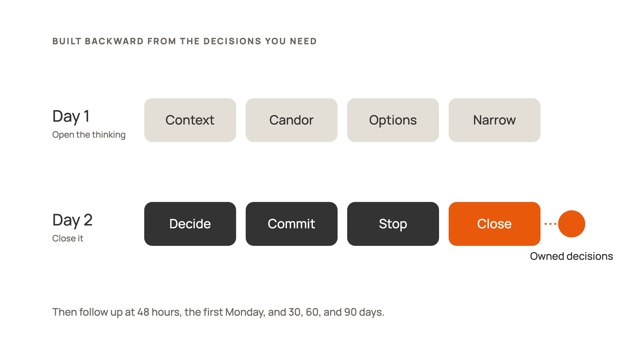
A good culture engagement follows a sequence. This is how Meaning + Method approaches it.
- Listen. Interviews, observation, and honest conversation with the people doing the work, to learn what's really going on rather than what the org chart says.
- Name it. Put precise language to what's working and what's in the way. Naming a problem accurately is most of solving it.
- Build the method. Redesign the rituals, decision rights, feedback loops, and meeting habits that shape daily work, around the team's real constraints.
- Hand it over. Build the capability inside your leaders so the new ways of working run without outside help.
The last step is the test of a good engagement. If the culture only holds while the consultant is in the room, it hasn't changed.
What a culture consultant is not
- Not an HR function. HR runs policies, hiring, and compliance. A culture consultant works on how leaders and teams behave day to day. The two work best together.
- Not an events planner. Celebrations and offsites can express culture, but they don't change it on their own.
- Not a values-statement writer. Words on a wall don't change behavior. What leaders do, reward, and tolerate does.
- Not a one-off workshop. Culture changes through repeated behavior over months, not a single great afternoon.
Signs you could use a culture consultant
- Capable people are producing mediocre results together
- The same conflicts keep returning with different faces
- Good ideas die in meetings, or never get raised
- Growth, a merger, or new leadership broke habits that used to work
- Your stated values and daily reality have drifted apart
The stakes are real. Gallup's State of the Global Workplace: 2026 Report found that only 20% of employees worldwide were engaged at work in 2025. Engagement is shaped largely by the everyday experience culture creates.
How long culture change takes
Individual habits can shift in weeks. Team norms usually take months. Lasting change across an organization often takes a year or more of consistent behavior from leaders. A consultant can speed that up by focusing effort on the few habits with the most leverage, but no one can shortcut repetition.
How to measure it
Culture change shows up in behavior before it shows up in surveys. Watch for:
- More people speaking in meetings, not just the usual few
- Bad news arriving earlier
- Decisions made faster, with clearer ownership
- Ideas coming from every level
- People able to name a decision that changed because of their input
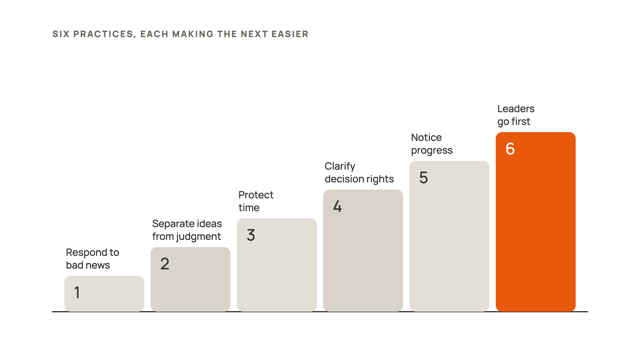
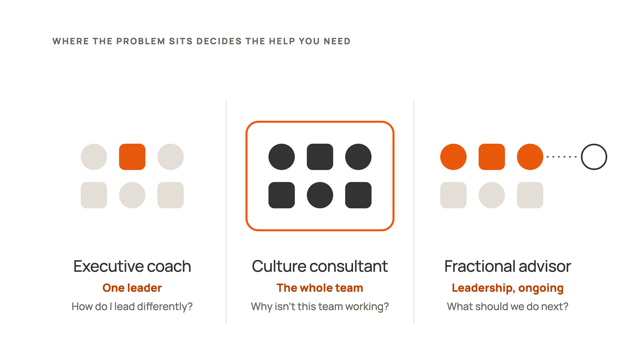
For the practices that build a creative thinking culture specifically, see How to Build a Creative Thinking Culture. If you're deciding between kinds of outside help, Executive Coach, Culture Consultant, or Fractional Advisor? compares the options.
Frequently asked questions
What does a culture consultant do?
A culture consultant helps an organization change how people work together. They diagnose the habits, norms, and structures behind recurring problems, then help leaders redesign rituals, decision rights, and everyday behaviors so better ways of working last after the engagement ends.
What is the difference between a culture consultant and HR?
HR manages policies, hiring, benefits, and compliance. A culture consultant focuses on how leaders and teams actually behave and decide day to day. They work best together: HR maintains the systems, while culture work changes the habits that run through them.
Can company culture really be changed?
Yes, but slowly and through behavior rather than announcements. Culture changes when what people repeatedly see rewarded and modeled changes. Leaders acting consistently over months matters far more than any single initiative, values statement, or event.
How long does a culture engagement take?
It depends on the size of the organization and the problem, but meaningful change typically takes several months, and lasting change often a year or more. A good engagement builds capability inside the company so progress continues after it ends.
How do you measure culture change?
Track behavior: who speaks up in meetings, how quickly bad news surfaces, how fast decisions get made, and whether ideas come from every level. Surveys help, but observable changes in how work happens are usually the earliest and most reliable signals.
Sources
- Schein, E. H., with Schein, P. (2017). Organizational Culture and Leadership (5th ed.). Wiley.
- Gallup. (2026, April). State of the Global Workplace: 2026 Report. gallup.com